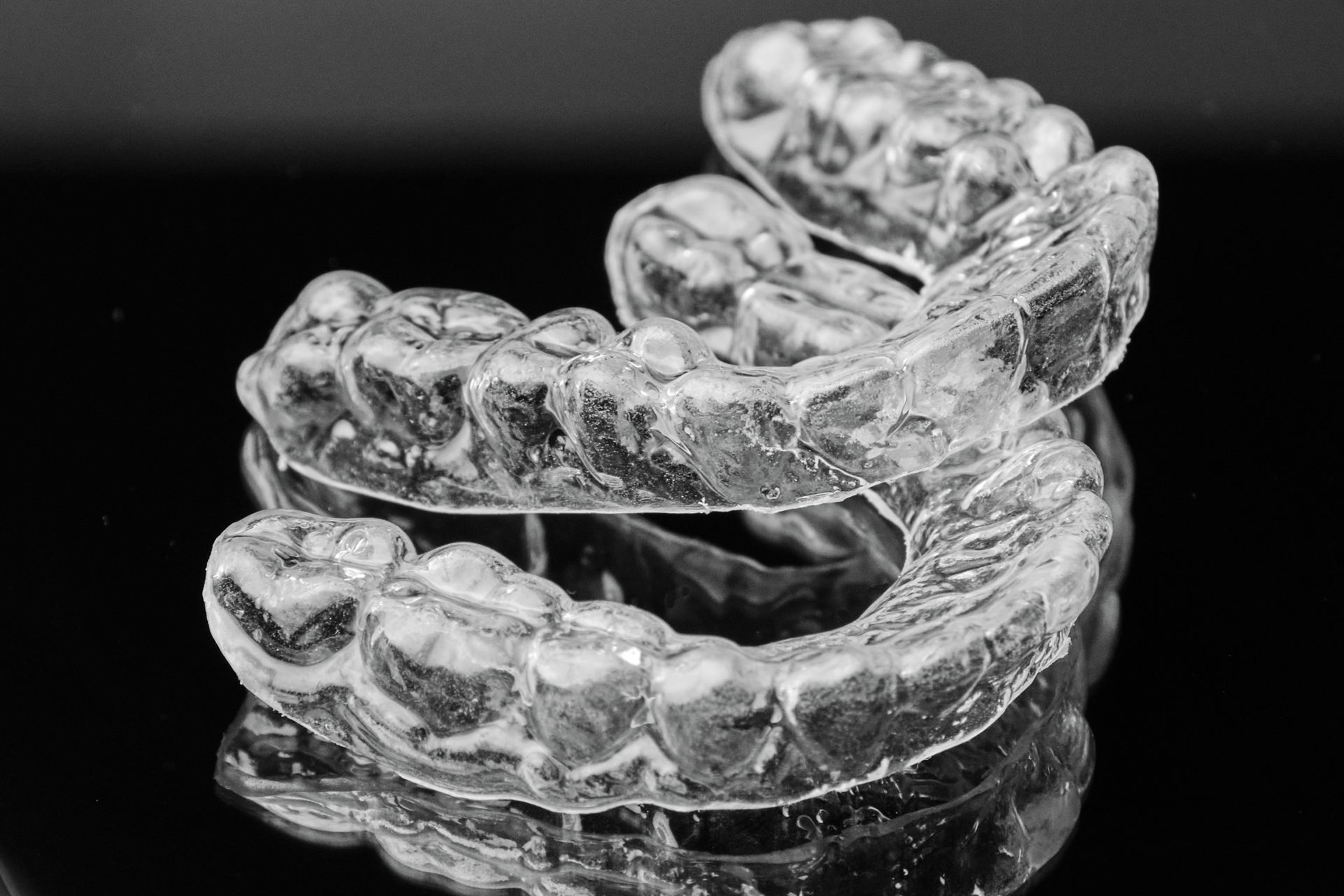
Clear Aligner Therapy
Straightening your teeth no longer has to mean metal braces. Clear aligner therapy moves teeth step by step with a series of nearly invisible, removable trays, following movements planned entirely on screen. At DizgeKlinik we start with a digital intraoral scan, and at your very first visit we watch together how your teeth will travel, stage by stage, to their final position. In meetings, photos and everyday life the treatment goes unnoticed; the trays come out for meals and go straight back in.
- Daily Wear
- 20–22 hours
- Aligner Change
- Every 1–2 weeks
- Check-ups
- Every 6–10 weeks
- Visibility
- Nearly invisible
What Are Clear Aligners and How Do They Work?
Clear aligners are thin, smooth, transparent appliances custom-made from a digital model of your teeth. Each aligner is designed to carry the teeth one small, controlled step towards the planned target; when its time is up, it is swapped for the next in the series, and the alignment moves a little closer to ideal with every tray.
The most visible difference from fixed braces is in the name: no brackets, no wires. Because the trays wrap the teeth in a smooth surface, they do not irritate the cheeks or lips and are barely noticeable at conversational distance. Being removable also means your eating, brushing and flossing habits stay exactly as they are.
Digital Planning: See the Result Before You Start
At DizgeKlinik the clear aligner journey begins with a three-dimensional digital scan of your mouth — no gag-inducing traditional impression trays required. On this model we analyse your current alignment, and every stage of the movement towards the target is simulated step by step on screen.
The best-loved part of the simulation is this: before treatment begins, we watch together on screen the order in which your teeth will move and a preview of the projected final alignment. The number of aligners, the approximate duration in months and whether attachments will be needed are all clear before your first tray is manufactured; production starts only after you approve the plan.
Who Is It For — and Who Still Needs Braces?
Clear aligners deliver predictable results for mild to moderate crowding, gaps between teeth, minor bite discrepancies and relapse after previous orthodontic treatment. Thanks to their invisibility and everyday comfort, they are the orthodontic option adults choose most; many of our patients with busy professional lives complete the entire treatment without anyone around them noticing.
It works at any age after adolescence; our aligner patients range from their twenties to their sixties. As long as the gums are healthy, age alone is no barrier — the decision rests on the condition of your teeth and bite, not your date of birth.
That said, not every case can be solved with aligners. Significant skeletal discrepancies, severely rotated teeth and cases requiring large tooth movements are usually managed more predictably with fixed braces. At the consultation we assess your teeth and bite together; if aligners are not the right tool for you, we say so plainly and plan the alternative that suits you best.
The Process: the 20–22 Hour Rule and Attachments
The success of treatment is largely in your hands: the aligners need to be in your mouth for 20–22 hours a day, coming out only for meals, drinks other than water, and brushing. Each aligner is typically worn for one to two weeks before you move to the next in the series on your dentist's schedule. Check-ups are planned at six to ten week intervals, where progress is compared against the digital plan.
Some tooth movements require the aligner to transfer force more effectively; this is where attachments come in. Attachments are tiny tooth-coloured composite bumps, smaller than a lentil, bonded to selected tooth surfaces. They act as grips for the aligner and are removed without harming the enamel once treatment ends. At conversational distance, most people never notice them either.
Eating, Drinking and Cleaning in Daily Life
With braces the list of forbidden foods is long; with clear aligners there are no dietary restrictions. You take the trays out and eat whatever you like. The one rule: drink nothing but water while wearing them — hot drinks can distort the plastic, and coloured drinks such as tea and coffee can stain both tray and teeth. Brushing after meals before re-inserting the aligner is the healthiest routine.
Cleaning is just as practical. There are no brackets to work around — you brush and floss exactly as you always have. The aligners themselves are cleaned twice a day with a soft brush and lukewarm water; avoid hot water, which can warp them. Storing trays in their case whenever they are out prevents loss and breakage.
After Treatment: Retention and Retainers
Teeth do not instantly settle into their new position; the surrounding tissues keep a tendency to drift back towards the old alignment for a while. Like every orthodontic treatment, clear aligner therapy is therefore completed with a retention phase. At the end, protective trays called retainers — or thin fixed wires bonded behind the front teeth — hold the teeth in their new position.
Retention usually asks for more intensive wear in the first months, after which most patients switch to nights only. Which type of retainer suits you, and the wearing schedule, is planned together at your final visit. In patients who stay loyal to their retainer routine, the new alignment holds for many years; it is the final step that makes months of effort permanent.
Frequently Asked Questions
The questions we hear most at consultations — answered plainly.
Are clear aligners really that hard to notice?
Because the trays are thin and transparent, they usually go unnoticed at conversational distance. Someone looking very closely may catch a slight sheen; most of our patients finish treatment without telling the people around them.
How long does aligner treatment take in total?
It depends on the complexity of the case: mild crowding can resolve within a few months, while moderate cases typically take 6–18 months. Your personal estimate becomes clear, together with the number of aligners, once digital planning is complete.
Will the aligners affect my speech?
For the first few days you may notice a slight lisp on certain sounds; the tongue adapts quickly and speech returns to normal. The best way to speed up the adjustment is not to take the aligner out, but to talk more.
Is clear aligner treatment painful?
A mild feeling of pressure during the first day or two of each new aligner is normal — it means the teeth are moving. The sensation is generally gentler than the soreness of braces and settles in most patients without any painkillers.
What happens if I wear them less than recommended?
Below 20–22 hours a day the teeth cannot keep up with the planned pace; the trays stop fitting properly and treatment drags on. If you have had a lapse, we review it at your check-up and update the plan if needed. Consistent wear is the biggest success factor in aligner therapy.
Will my teeth shift back after treatment?
Without a retainer that risk is real; teeth tend to drift back towards their old alignment, especially in the first months. At the end of treatment we prepare a personalised retainer plan for you; when it is followed, the new alignment is maintained for many years.
Let's plan your treatment together
At your free first consultation, our dentists listen first — then we map out your options.