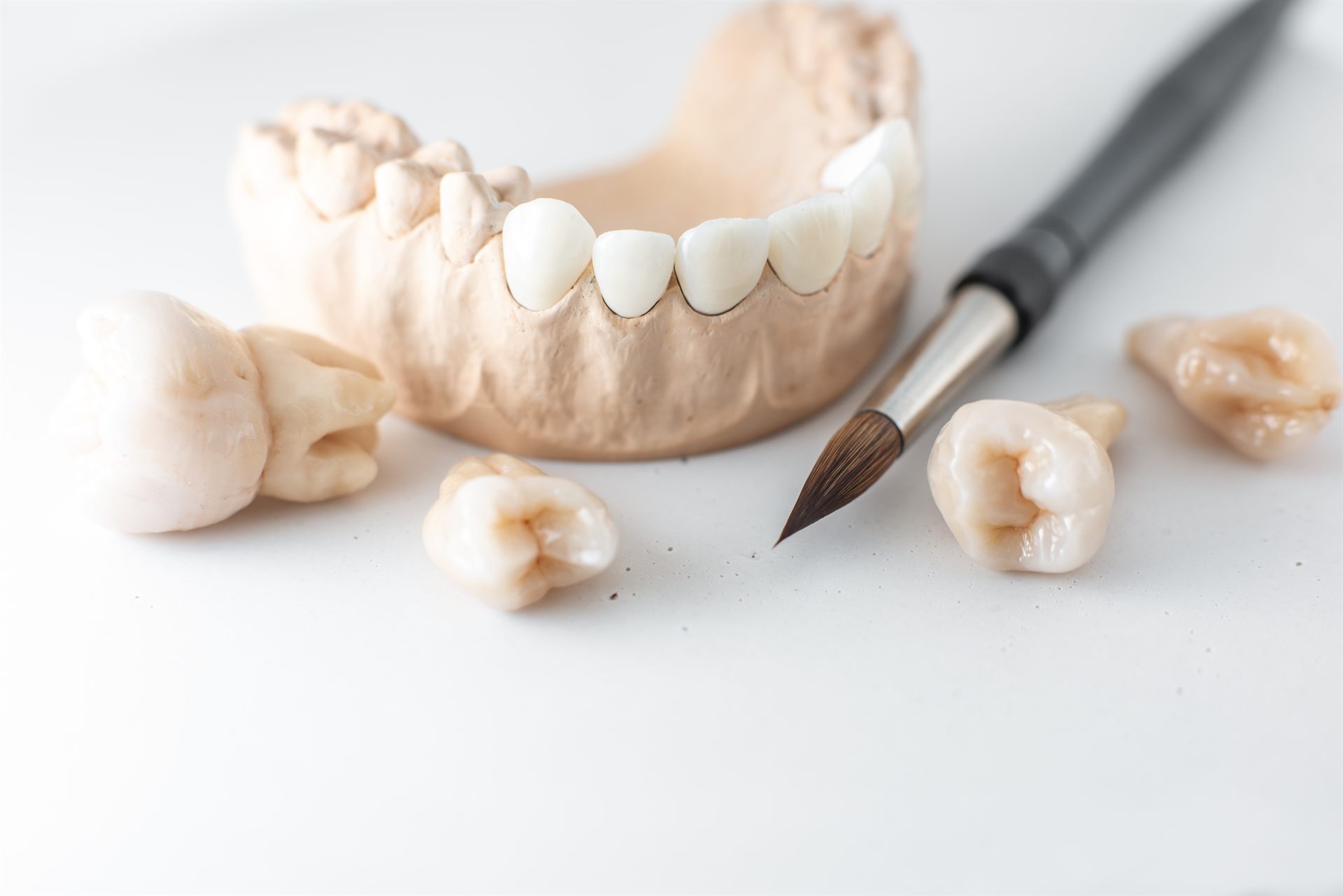
Zirconium Crowns
If you want to renew your smile without giving up a natural look, zirconium crowns are among the most reliable options in modern aesthetic dentistry. These metal-free restorations transmit light much like natural enamel, never cast a grey shadow at the gumline, and are strong enough to handle the chewing forces of the back teeth. At DizgeKlinik, we design and mill your crowns in-house with CAD/CAM technology, digitally matching shade and shape to your own teeth.
- Procedure Time
- 2–3 hours total
- Visits
- 2 visits
- Anaesthesia
- Local
- Longevity
- 10–15+ years with care
What Is a Zirconium Crown?
A zirconium crown is a full-coverage restoration built on zirconium dioxide — a white, high-strength ceramic — either layered with porcelain or milled as a single monolithic piece. Because the core itself is tooth-coloured, light travels into the restoration the way it does through a natural tooth, giving the crown depth and vitality instead of the flat, opaque look associated with metal-based work.
Zirconium is also highly biocompatible: it is gentle on gum tissue, carries no risk of metal allergy, and does not cause the grey line that can appear at the gum margin around older metal-fused crowns over the years.
Why Does Translucency Matter?
Natural enamel lets a certain amount of light pass through — that is what makes a smile look alive. Crowns with a metal core block this light entirely, which is why they can look dull in daylight or photographs. Zirconium transmits light in a controlled way, so the restoration blends in with the depth and character of the neighbouring teeth.
Different types of zirconia serve different goals: highly translucent multilayer blocks are favoured in the smile zone, while denser, strength-first blocks are chosen for molars. Which type suits you depends on the position of the tooth and the colour of the structure underneath — something we assess together at your examination.
When Do We Recommend Zirconium Crowns?
Zirconium crowns are a first-line option for teeth weakened by large fillings, root canal treatment, fractures or heavy wear. They also solve discolouration and shape problems that whitening or veneers cannot, and they scale from a single tooth to full-arch rehabilitations and smile design cases.
Thanks to its high fracture resistance, zirconium performs reliably in the posterior region and as a bridge framework, and it is a frequent choice for crowns on implants. If you grind or clench your teeth, material selection and bite design are planned with extra care — a judgement your dentist makes after a clinical examination.
The Treatment Process at DizgeKlinik
At the first visit we examine your teeth, renew any failing fillings and prepare the teeth with as little reduction as the crown thickness allows. Instead of conventional impression trays, we take a digital scan with an intraoral scanner — far more comfortable, and accurate to a fraction of a millimetre.
Your crowns are then designed and milled in-house on our CAD/CAM system, with no waiting on an outside laboratory. At the try-in we review shade, shape and bite together, make any fine adjustments, and bond the crowns permanently with dedicated adhesive systems once you are happy. Most cases are completed in two visits with only a few hours in the chair overall; in suitable cases same-day production is possible.
Between visits your prepared teeth are protected with temporary crowns, so daily life continues without interruption.
Zirconium, E-max or Laminate Veneers?
E-max (lithium disilicate) full ceramics edge ahead of zirconium in translucency, which makes them a popular choice for single front teeth. Zirconium stands out for strength: it is the safer option for bridges, molars and teeth with significant structure loss. Both are metal-free and capable of excellent aesthetics.
Laminate veneers, by contrast, cover only the front surface of the tooth. They are ideal for correcting colour and shape on otherwise healthy teeth with minimal preparation — but when a tooth has a large filling, a fracture or a root canal, a crown is the right tool. The best choice is never about the material alone; it depends on the condition of the tooth, your bite and your expectations, and it becomes clear at the consultation. Where it serves the result, we happily combine techniques within the same smile.
Aftercare and Longevity
How long zirconium crowns last depends above all on daily care and regular check-ups; with good habits, most patients use them comfortably for 10–15 years and often longer. The crown itself cannot decay, but the natural tooth at its margin can — so brushing twice a day and daily flossing remain just as important as before.
Avoid cracking very hard foods such as ice or nut shells with your teeth, and if you grind at night, wear the protective splint your dentist recommends. A professional check-up and cleaning every six months lets us monitor the crown margins, your bite and gum health for years to come.
Treatment Process
Preparation
Teeth are minimally prepared and a digital impression is taken.
Design
Crowns are digitally designed to suit your face and teeth.
Try-in
Shade and form are tried in, with fine adjustments as needed.
Bonding
Crowns are permanently bonded with dedicated adhesive systems.
Frequently Asked Questions
The questions we hear most at consultations — answered plainly.
How long do zirconium crowns last?
With good daily care and regular check-ups, most patients use zirconium crowns for 10–15 years and often well beyond. Oral hygiene, grinding habits and the health of the gum around the crown are the main factors that determine lifespan.
Is the procedure painful?
No. Tooth preparation is done under local anaesthesia, so you feel no pain during the visit. Mild sensitivity to hot and cold may follow for a few days and usually settles once the final crowns are bonded; if it lingers, a small bite adjustment resolves it.
Do zirconium crowns stain or change colour?
No. Zirconium and its porcelain layer are non-porous, so coffee, tea and tobacco do not stain them the way they stain natural enamel. They cannot be whitened either, which is why we finalise the shade together at the try-in stage.
I have a metal allergy — are zirconium crowns safe for me?
Yes. Zirconium is a ceramic-based material containing no nickel or other allergenic metals, and it is exceptionally kind to gum tissue. It is one of the options we recommend most often to patients with a history of metal sensitivity — your dentist will still confirm suitability at the examination.
How much do zirconium crowns cost?
The cost depends on how many teeth are treated, the type of zirconia used and any preparatory work needed, so a standard figure would be misleading. At your free consultation we examine your teeth and give you clear information along with a personalised plan.
Can my old metal-fused crowns be replaced with zirconium?
Yes, and it is one of the procedures we perform most often. The old crowns are removed, the teeth underneath are checked and treated if needed, and new zirconium crowns are produced from a digital scan. The grey shadow at the gumline disappears in the process.
Let's plan your treatment together
At your free first consultation, our dentists listen first — then we map out your options.