Teeth Whitening
Teeth that darken over the years are rarely a sign of disease; the change usually comes from surface stains and the dentine showing through the enamel. Professional whitening is an evidence-based cosmetic treatment that lifts this discolouration safely with clinician-supervised gels. At DizgeKlinik we combine light-activated in-office whitening with a home protocol using custom-made trays, and every treatment starts with an examination, professional cleaning and an enamel check. Our goal is never an artificial glare — it is a natural, lasting brightness that suits your skin tone and your face.
- Session Time
- 45–60 min
- Shade Change
- 2–4 shades on average
- Anaesthesia
- Not needed
- Longevity
- 1–3 years with care
Why Do Teeth Discolour?
Discolouration falls into two groups. Extrinsic stains come from pigmented substances — coffee, tea, red wine, dark fruits, sauces and tobacco — settling on the enamel surface and into its micro-cracks. Part of this staining lifts with a professional cleaning alone; the rest responds very well to whitening gels.
Intrinsic discolouration comes from within the tooth itself: as we age the enamel thins and the yellowish dentine underneath shows through more, while certain childhood antibiotics, excessive fluoride intake, root canal treatment or dental trauma can also change the colour from the inside. Which type dominates directly determines how much whitening can achieve — which is why, with us, the process always begins with a detailed examination.
How Does In-Office Whitening Work?
In-office whitening is the fastest method, carried out under clinical conditions and direct supervision. Once your gums are fully covered with a protective barrier, a whitening gel at a concentration not available for home use is applied to the front surfaces of the teeth. A dedicated LED light activates the gel, which travels through the enamel pores and breaks down the colour molecules.
The application is typically done in two or three rounds of about fifteen minutes each, so the whole session takes 45–60 minutes. Most patients see a change of 2–4 shades in a single visit; a second session can be planned for dark or resistant discolouration. Because the gel concentration, contact time and number of rounds are tailored to you, both the result and your comfort stay under control throughout.
Home Whitening and the Combined Protocol
Home whitening uses thin, custom-made trays produced from your digital impression. A low-concentration gel is placed inside the trays, which you wear for a few hours during the day or overnight, depending on your dentist's recommendation. The result develops gradually over 10–14 days; the process is slower but gentle, with a lower risk of sensitivity.
The most balanced outcome comes from the combined protocol: a fast start with a single light-activated session in the clinic, followed by a few days of reinforcement with the home trays. This approach both stabilises the new shade and extends how long it lasts. And since the trays remain yours, short top-up applications are possible later with your dentist's approval.
Who Is a Candidate — and Who Should Wait?
Almost any adult with healthy gums, treated cavities and sound enamel is a good candidate. Teeth stained by external factors such as coffee, tea and smoking respond fastest, and age-related yellowing also whitens very rewardingly.
In some situations we recommend waiting or choosing a different plan. During pregnancy and breastfeeding we postpone whitening as a precaution. Untreated decay, leaking fillings or gum inflammation are resolved first. For patients with pronounced sensitivity, a low-concentration home protocol may be preferred, or desensitising treatment is carried out beforehand. We are also upfront about one thing: crowns, veneers and fillings do not change colour with the gel, so if you have restorations in the smile zone, a separate plan is needed for shade matching. Deep tetracycline discolouration may respond only partially; in those cases we discuss alternatives such as veneers together.
The Session Step by Step and Managing Sensitivity
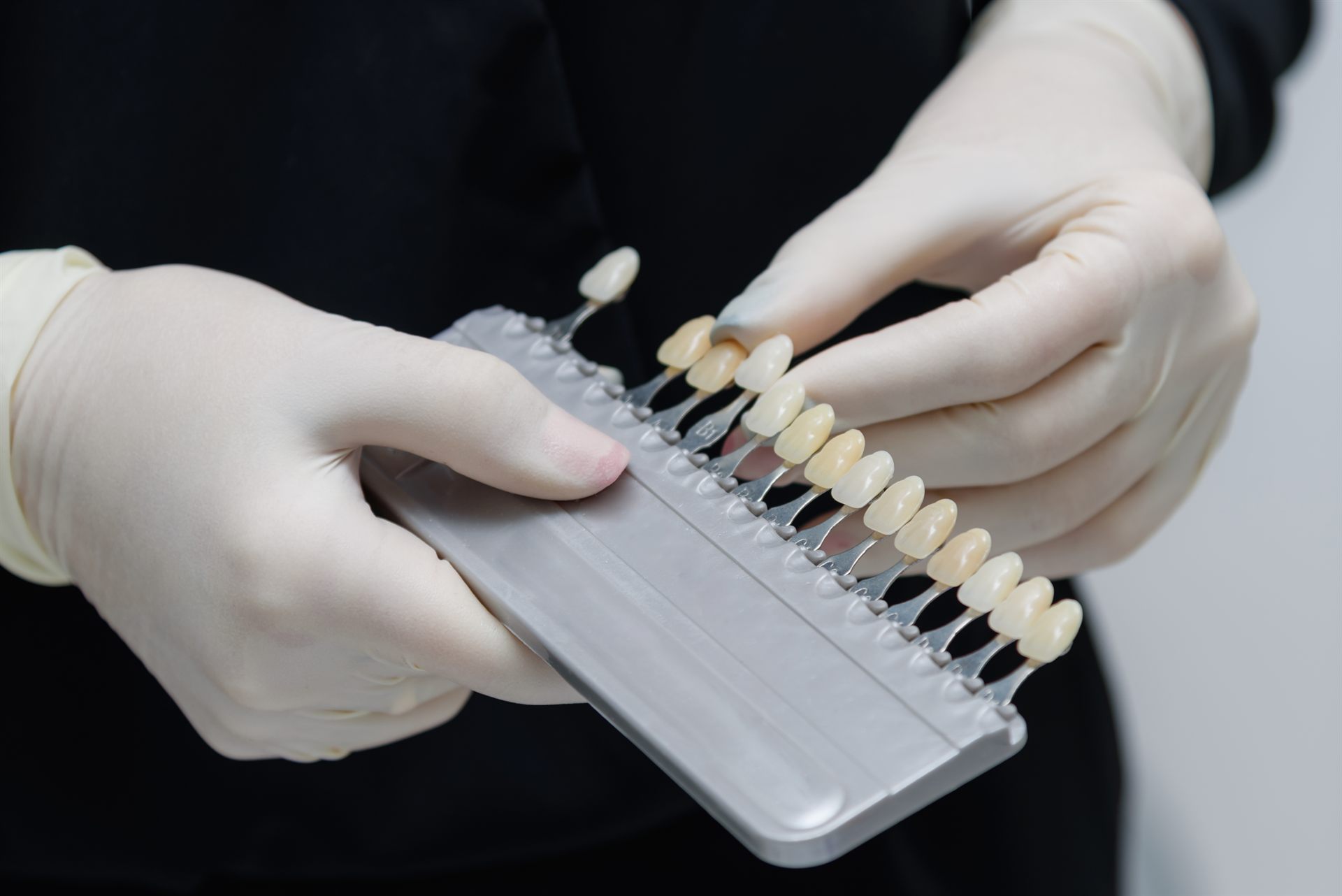
A whitening session at DizgeKlinik starts with an examination and shade assessment; your current tone is recorded with a shade guide and photographs so the result can be measured. The tooth surfaces are then cleaned, the gums are protected with a barrier, the gel is applied and activated with light. At the end of the session a fluoride or similar enamel-strengthening agent is applied to seal the pores.
Sensitivity is the best-known and most temporary side effect of whitening: some patients notice mild twinges with cold during the first 24–48 hours, and it settles on its own. To make this period comfortable we recommend a desensitising toothpaste and, where needed, reduce the gel dose and contact time for you. Keeping to a plain, colour-free diet for the first 48 hours — our patients call it the white diet — also helps the new shade settle in.
Longevity, Maintenance and Our Enamel-Friendly Approach
Whitening does not paint the teeth a permanent colour; it reverses accumulated discolouration, so how long it lasts depends on your habits. In heavy coffee drinkers and smokers the shade may darken sooner, while with regular care the result typically holds for 1–3 years. Drinking dark beverages through a straw, rinsing with water afterwards, brushing twice a day and having a professional cleaning every six months all extend that window noticeably. When the colour begins to deepen, a short top-up with your home trays is usually enough — a full session from scratch is rarely needed.
Throughout all of this, our first priority is the health of your enamel. We work with pH-balanced, enamel-friendly gels, set the dose and timing individually for every patient, and avoid uncontrolled back-to-back applications. Research shows that whitening performed with the right indication and under professional supervision does not cause lasting damage to enamel; our job is to guard that safety margin rigorously in every single case.
Treatment Process
Examination
Shade is recorded and surfaces prepared with scaling.
Protection
Gums are isolated with a barrier gel.
Application
Whitening gel is applied in 15-minute light-activated cycles.
Aftercare
Desensitiser is applied and maintenance advice is shared.
Frequently Asked Questions
The questions we hear most at consultations — answered plainly.
Does whitening damage the enamel?
Studies show that whitening performed under professional supervision, at the right concentration and timing, does not cause lasting harm to enamel. The risk lies in uncontrolled, frequent, high-dose home use. We also apply an enamel-strengthening agent after every session.
Will my teeth be sensitive afterwards, and for how long?
Some patients notice mild, temporary sensitivity to cold during the first 24–48 hours. A desensitising toothpaste — and a dose adjustment where needed — keeps this period comfortable; lasting sensitivity is not expected.
How long do the results last?
Depending on diet and smoking habits, the result typically holds for 1–3 years. Limiting dark drinks, regular brushing and six-monthly cleanings extend it, and when needed a short top-up with your home trays is usually enough.
Can I have whitening while pregnant or breastfeeding?
As a precaution, we recommend postponing whitening during pregnancy and breastfeeding. Like all non-urgent cosmetic procedures, it is simply scheduled for after this period — your smile can wait a few months safely.
Will my fillings and crowns whiten too?
No. Whitening gels act only on natural tooth structure; fillings, crowns and veneers keep their colour. If you have restorations in the smile zone, we plan their replacement to match the new shade after whitening.
Do over-the-counter whitening products work?
Whitening toothpastes and strips are low-dose; they may reduce surface stains slightly but cannot change the underlying shade. A measurable, safe result requires the gel concentration and timing to be set by a dentist.
Let's plan your treatment together
At your free first consultation, our dentists listen first — then we map out your options.