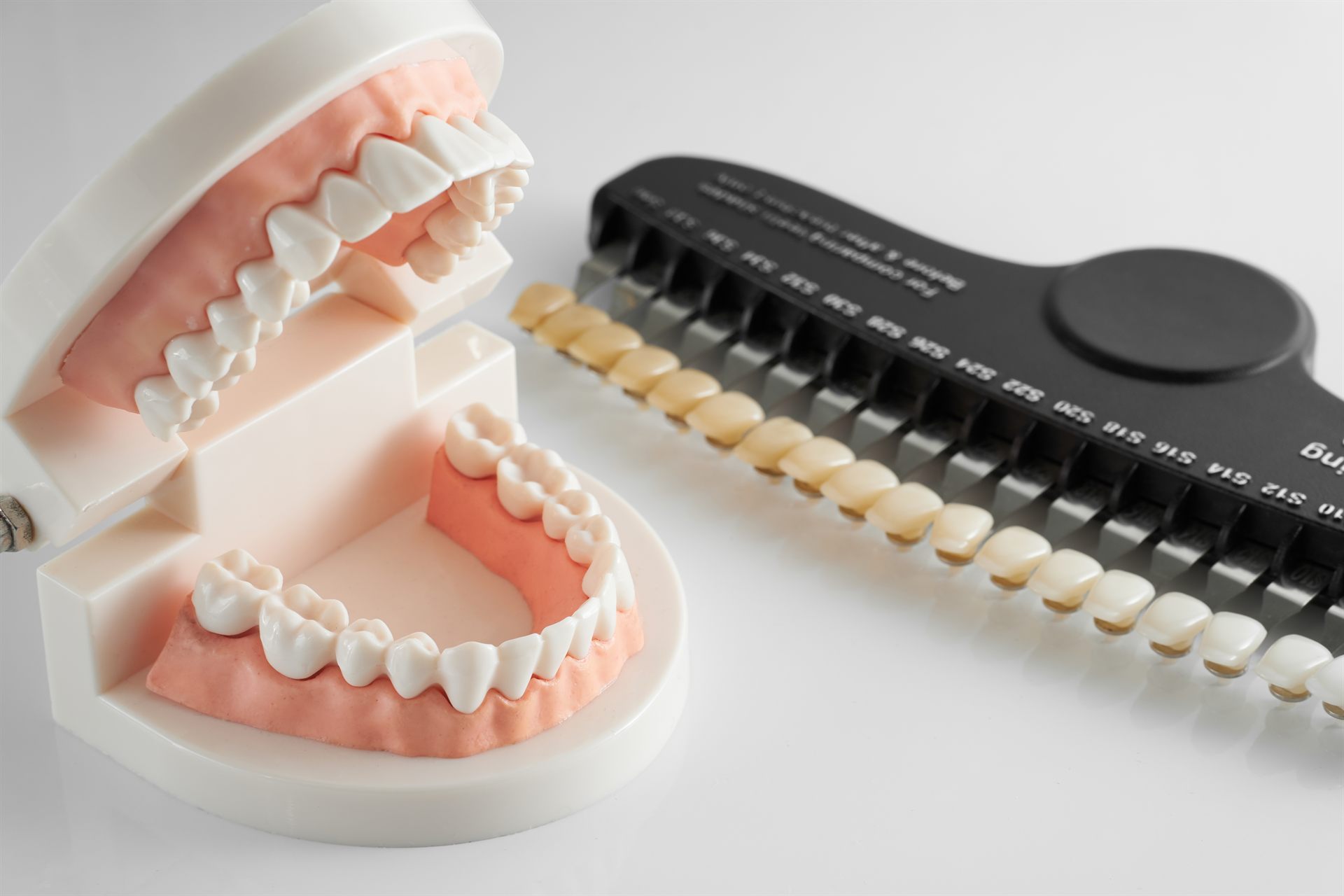
Porcelain Laminate Veneers
Porcelain laminate veneers are wafer-thin shells of ceramic — just 0.3 to 0.7 millimetres — bonded to the front surface of the teeth. Despite being about as thin as a contact lens, porcelain transmits light almost exactly like natural enamel, so a well-planned veneer is virtually undetectable. At DizgeKlinik we plan every veneer case around a minimal-prep philosophy — zero drilling where the case allows — and show you your new smile with a mock-up preview before a single tooth is touched.
- Veneer Thickness
- 0.3–0.7 mm
- Visits
- 2–3 visits
- Tooth Reduction
- Minimal or none
- Longevity
- 10–15+ years with care
What Is a Porcelain Laminate Veneer?
A laminate veneer is a custom-made porcelain shell bonded to the front of a tooth with powerful adhesive systems, replacing only a very thin layer of the visible surface. At 0.3 to 0.7 millimetres it is thinner than a fingernail, yet because porcelain handles light the way enamel does, the result has the depth and vitality that opaque restorations simply cannot match.
What makes the treatment so valuable is its respect for tooth structure. Preparation stays within the enamel layer, and in suitable cases we can work with no drilling at all — the so-called prepless technique. Unlike a crown, which wraps the entire tooth, a veneer covers only the front surface; everything else remains untouched. That is why veneers are considered one of the most conservative options in aesthetic dentistry.
Who Is — and Who Isn't — a Good Candidate?
Veneers excel at discolouration that does not respond to whitening (tetracycline staining, for example), short, worn or unevenly shaped teeth, gaps between teeth (diastema), and mild crowding or rotations in patients who prefer not to have orthodontic treatment. They work at every scale, from matching a single tooth to its neighbours to a full smile design across eight to ten teeth.
Not every smile is a veneer case, though. In significant bite problems — edge-to-edge contact, or lower teeth loading the upper front teeth heavily — thin porcelain is placed under constant stress; these cases call for orthodontic correction first, or a different type of restoration. Heavy clenching and grinding (bruxism) also raises the risk. In mild, controlled cases we proceed with a protective night guard as part of the plan; in advanced bruxism we steer you toward more durable alternatives.
Bond strength also depends on healthy enamel: teeth with large fillings or advanced enamel loss are often better served by a full-ceramic crown. The final call is made after a clinical examination and a bite analysis.
Digital Design and the Mock-up Preview
At DizgeKlinik, every veneer case starts with digital smile design. Using facial photographs, an intraoral scan and a smile analysis, the new length, shape and arrangement of your teeth are designed on screen. The design is never purely cosmetic; your lip line, facial proportions and bite are evaluated together.
The step patients love most is the mock-up: the digital design is transferred onto your teeth in minutes using a temporary material, and you see your new smile in the mirror, on your own face — before any tooth is prepared. Your feedback on length, shape and smile line is worked back into the design. Nothing goes to the laboratory until you approve; there is no such thing as a surprise result at our clinic.
The Treatment Step by Step
Once the mock-up is approved, we move to the preparation visit. Where needed, the front surface of each tooth is refined by no more than 0.3 to 0.7 millimetres, staying within the enamel; in prepless cases this step is skipped entirely. Because preparation is so superficial, most patients need no anaesthesia at all, or only a very light dose.
A digital impression follows, and your veneers are custom-crafted in the laboratory while temporaries protect your teeth — production usually takes about a week. At the fitting visit each veneer is tried in individually; once shade, shape and margin fit are approved, the veneers are bonded to the enamel with dedicated adhesive systems. From that moment they behave as part of the tooth. The whole treatment is typically completed in two to three visits over one to two weeks.
Laminate Veneers vs Zirconium Crowns
Both deliver excellent aesthetics; the difference lies in how much tooth structure is removed. A zirconium crown wraps the whole tooth, which requires 1 to 2 millimetres of reduction on every surface. A veneer concerns itself only with the front surface, and reduction stays within 0.3 to 0.7 millimetres — several times more of your natural tooth is preserved.
The choice therefore follows the condition of the tooth. For sound, filling-free front teeth whose issue is mainly colour or shape, veneers are the first option. For teeth with large fillings, root canal treatment or major structural loss, a zirconium or full-ceramic crown is the sounder choice. At the consultation we assess every tooth individually — and where it serves the result, we combine both techniques within the same smile.
Lifespan and Care
In the right case and with proper care, porcelain veneers last 10 to 15 years on average — often considerably longer. Porcelain does not stain or change colour; coffee, tea and smoking may darken natural teeth, but your veneers hold their shade. The keys to longevity are bonding quality and a correctly balanced bite — both our responsibility during treatment.
Your part is simply the care you would give natural teeth: brushing twice a day, daily flossing and a check-up every six months. Avoid habits such as biting pens or cracking nuts with veneered teeth, and if you tend to clench, wear your night guard consistently. At each check-up we inspect the bonding margins and your bite, keeping your smile as it was on day one.
Frequently Asked Questions
The questions we hear most at consultations — answered plainly.
Will my teeth be filed down for veneers?
No — the veneer philosophy is exactly the opposite. Preparation stays on the enamel surface at 0.3 to 0.7 millimetres, and in suitable cases no drilling is needed at all. The heavy reduction required for full crowns simply does not apply here.
How many visits does treatment take?
Two to three visits in most cases: design and mock-up preview, preparation and impressions, then bonding. Including laboratory production, the whole process is usually complete within one to two weeks.
Do veneers stain or change colour over time?
The porcelain surface does not pick up stains; coffee, tea and smoking will not alter it. To avoid a mismatch later, we plan the target shade together with your neighbouring teeth at the design stage, whitening them first where needed.
I grind my teeth — can I still get veneers?
It depends on the severity. In mild, controlled bruxism veneers are possible, but we make a protective night guard a firm condition of treatment. In advanced grinding, thin porcelain carries real risk, and we will honestly recommend more durable alternatives instead.
Can a veneer chip or come off?
With correct planning and bonding it is rare; once bonded to enamel, porcelain functions as part of the tooth. Edge chips can still happen with hard-object habits. If anything does occur, contact us — most issues are solved by repairing or remaking a single veneer.
Should I choose veneers or zirconium crowns?
If the tooth is structurally sound and the issue is mainly colour or shape, veneers are the more conservative choice. Teeth with large fillings, root canals or major structural loss usually do better with zirconium crowns. We evaluate each tooth individually and propose the right combination for you.
Let's plan your treatment together
At your free first consultation, our dentists listen first — then we map out your options.